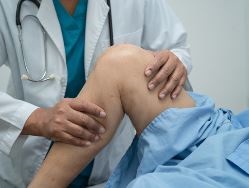
SEPTEMBER 11, 2025 – Hospital for Special Surgery (HSS), the world’s leading academic medical center focused on musculoskeletal health, presented a research study at the European Society of Regional Anesthesia and Pain Therapy (ESRA) Annual Meeting, highlighting the effects of cannabidiol in patients undergoing bilateral total knee arthroplasty, often referred to as double knee replacement. Cannabidiol (CBD), a non-intoxicating phytocannabinoid, has shown limited clinical evidence of its pain-relieving and opioid-sparing properties. Currently, the only FDA approved cannabidiol solution is available by prescription for specific conditions.
The study demonstrated the importance of monitoring accurate dosage and highlighted the need for additional long-term studies to better understand the role of cannabidiol in post-surgery pain management.
The pilot study, conducted over four years, followed 36 patients who received cannabidiol as a part of their treatment following surgery. Previous surveys at HSS and other institutions have shown that many patients are using cannabidiol to self-medicate, creating challenges for providers. To ensure safety, only relatively healthy patients were enrolled due to the demanding and invasive nature of the surgery.
“These patients experience significant pain after surgery and often require high doses of opioids,” said Alexandra Sideris, PhD, Director of the Pain Prevention Research Center at HSS and one of the co-authors of the study. “We approached this study knowing that if we were going to study a cannabis constituent to try to see if there is any benefit, we need to start with a population that could significantly benefit from adding on an additional medication. It is very painful to have both knees replaced.”
According to internal HSS data, this specific patient population showed a clear need for better pain control. The study team performed a blinded study, dividing patients into three groups. Some patients did not receive any CBD; instead, they were given the placebo solution. The other two groups received 400 milligrams or 800 milligrams of CBD. Patients received their first dose right before they went into surgery. They then received three additional doses on the evenings of the subsequent postoperative days—for a total of four doses. The study team monitored how many opioids were required throughout the first 72 hours after surgery.
“What we found after completing the study is that patients who were randomized or received the 400-milligram dosage actually had 30% lower opioid requirements compared to the group receiving 800 milligrams. We found a lower dose seemed to help but the higher does did not. This suggests the importance of finding the right balance when determining the appropriate dose,” said Dr. Sideris. “CBD appears to be promising, but we have to be very careful in terms of the doses we give to patients.”
The study further showed that patients in the 400-milligram group reported lower pain scores at every time point measured, with nearly a two-point difference compared to the other groups. According to Dr. Sideris, the 800-milligram group had much higher opioid-related distress scores, which suggested the higher dose did not decrease opioid requirements but caused more side effects for patients. The side effects persisted for up to a week and included dizziness and fatigue.
“Moving forward, we are planning to pursue more studies where we hope to focus on the lower dose of 400 milligrams and include a larger cohort of patients. Our data suggests that the side effects profile and the fact that we didn’t see any signal for decreased opioid needs or pain suggests that we probably don’t want to go into 800 milligrams for designing a larger study,” said Kethy M. Jules-Elysee, MD, an anesthesiologist at HSS and one of the co-authors of the study.
Poster Details:
Title: Effects of cannabidiol (CBD) oral solution in patients undergoing bilateral total knee arthroplasty: a randomized, controlled, parallel, triple blind, pilot study
Co-authors: Chan W, Liu J, Baaklini L, Kirksey M, Illescas A, Waldman S, Jules-Elysee K, Sideris A
William Chan1,3, Jiabin Liu1,2,3, Lila Baaklini1,2,3, Meghan Kirksey1,2,3, Alex Illescas1, Seth Waldman1,2, Kethy Jules-Elysee1,2, Alexandra Sideris1,2,3
HSS is the world’s leading academic medical center focused on musculoskeletal health. At its core is Hospital for Special Surgery, nationally ranked No. 1 in orthopedics (for the 16th consecutive year), No. 3 in rheumatology by U.S. News & World Report (2025-2026), and the best pediatric orthopedic hospital in NY, NJ and CT by U.S. News & World Report “Best Children’s Hospitals” list (2024-2025). In a survey of medical professionals in more than 20 countries by Newsweek, HSS is ranked world #1 in orthopedics for a fifth consecutive year (2025). Founded in 1863, the Hospital has the lowest readmission rates in the nation for orthopedics, and among the lowest infection and complication rates. HSS was the first in New York State to receive Magnet Recognition for Excellence in Nursing Service from the American Nurses Credentialing Center five consecutive times. An affiliate of Weill Cornell Medical College, HSS has a main campus in New York City and facilities in New Jersey, Connecticut and in the Long Island and Westchester County regions of New York State, as well as in Florida. In addition to patient care, HSS leads the field in research, innovation and education. The HSS Research Institute comprises 20 laboratories and 300 staff members focused on leading the advancement of musculoskeletal health through prevention of degeneration, tissue repair and tissue regeneration. In addition, more than 200 HSS clinical investigators are working to improve patient outcomes through better ways to prevent, diagnose, and treat orthopedic, rheumatic and musculoskeletal diseases. The HSS Innovation Institute works to realize the potential of new drugs, therapeutics and devices. The HSS Education Institute is a trusted leader in advancing musculoskeletal knowledge and research for physicians, nurses, allied health professionals, academic trainees, and consumers in more than 165 countries. The institution is collaborating with medical centers and other organizations to advance the quality and value of musculoskeletal care and to make world-class HSS care more widely accessible nationally and internationally. www.hss.edu.